My Design Process
2023
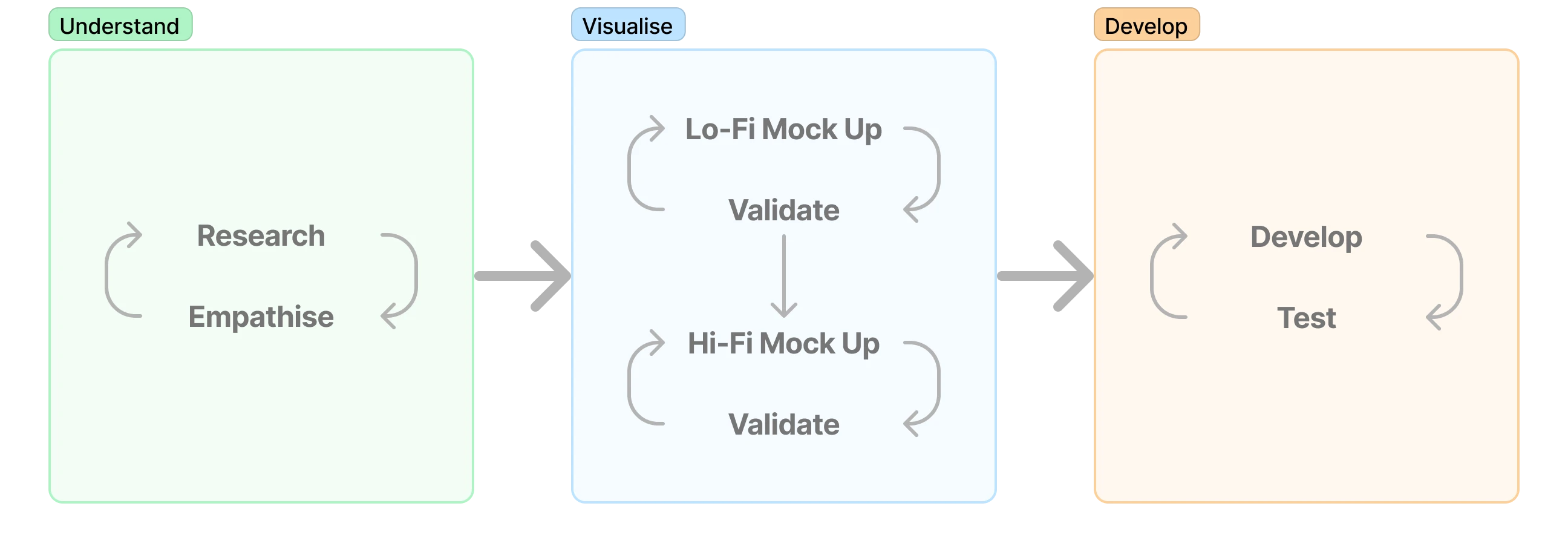
The journey of creating a product is incredibly rewarding, yet challenging. Over the years, I have refined the way I design products. My process involves several key phases: research, empathy, visualisation, validation, development, and testing. This post explores the importance of each of these phases and how critical they are to my design process. These steps help ensure I can design a useful, relevant product that brings not only value but joy to users in real-world applications.
Overview
Designing great products is about balancing usability, scalability, and user needs. A strong design process ensures that we not only meet business goals but also provide seamless experiences for users. Over the years, I have developed a structured approach that helps me tackle complex design problems.
My Approach
My design process is iterative, user-centred, and data-driven. Every project goes through the following key phases:
- Research: Understanding users, competitors, and business needs.
- Empathy: Identifying pain points and needs from real-world experiences.
- Visualisation: Wireframing and prototyping to explore solutions.
- Validation: Testing concepts with users and iterating based on feedback.
- Development: Collaborating with engineers to bring designs to life.
- Testing: Ensuring quality, accessibility, and scalability before release.
Research & Empathy
The foundation of any good design is research. I use a mix of qualitative and quantitative methods to uncover key insights about users, their workflows, and their challenges.
- Conducting customer interviews to understand pain points.
- Reviewing analytics and behavioural data.
- Analysing competitor products to identify gaps and opportunities.
Visualisation & Prototyping
Once research is complete, I translate findings into low-fidelity wireframes and interactive prototypes. This helps validate early ideas with stakeholders and users before moving into high-fidelity design.
- Sketching and wireframing to explore multiple solutions.
- Building interactive prototypes in Figma or Framer.
- Conducting usability testing to refine navigation and interactions.
Validation & Iteration
The best designs come from continuous iteration. I prioritise usability testing, stakeholder feedback, and A/B testing to refine designs before launch.
- Running usability tests to uncover issues early.
- Gathering feedback from developers and product managers.
- Making data-driven design changes based on test results.
Development & Handoff
Once designs are validated, I work closely with developers to ensure a smooth handoff. I focus on making sure:
- Design files are organised and easy to interpret.
- Interactive states and transitions are well-documented.
- Components follow design system guidelines.
Final Testing & Launch
Before release, I conduct final QA and accessibility tests to ensure a smooth user experience.
- Testing on multiple devices and screen sizes.
- Ensuring WCAG accessibility compliance.
- Monitoring user feedback and making post-launch improvements.
Key Takeaways
Through this process, I have learned that great design is not just about aesthetics. It’s about understanding users, making data-driven decisions, and iterating continuously. My biggest takeaways include:
- Designing with empathy ensures that solutions truly meet user needs.
- Testing early and often prevents major issues later.
- Collaboration with engineers is key to creating scalable solutions.
Whether designing a complex SaaS platform or a simple user interface, these principles help me create products that are both intuitive and impactful.